Q. 01
Can I bring a surge protector on a cruise ship?
No, surge protectors are banned across every major cruise line. The surge-protection circuits and indicator lights can interfere with the ship's electrical safety system and trip protection. Cruise security confiscates them at embarkation. The allowed alternative is a NON-surge power strip — no surge circuitry, no indicator LED — on every line except Royal Caribbean.
Q. 02
Can I bring a power strip on a cruise ship?
On most major lines — Carnival, Norwegian, Princess, Celebrity, Disney, Holland America, MSC, Cunard, P&O, Costa, Marella — yes, as long as it has NO surge protection and NO indicator light. Royal Caribbean is the exception: since 2024 it bans all power strips, multi-plug adapters, AND extension cords fleet-wide. The 2024 policy was expanded later that year to also prohibit multi-plug outlets. On Royal Caribbean, only USB-only multi-port charging cubes that plug into a single AC outlet are permitted (must carry US/EU CE conformance markings). Source: royalcaribbean.com FAQ.
Q. 03
Do I need a voltage converter for my US devices on cruise ships?
No. Modern smartphones, laptops, tablets, cameras, and chargers all accept 100–240V automatically — check your charger's label for '100–240V' which indicates universal voltage. Voltage converters are only needed for legacy single-voltage appliances like older US hair dryers and curling irons. For everything else, only a plug adapter (if your cabin has European-only outlets) is needed.
Q. 04
How many outlets are typically in a cruise ship cabin?
Standard cabins usually have 1–2 easily accessible outlets, though some have additional outlets in inconvenient locations like behind furniture. Disney is the most generous (4× US + 2× European in most cabins). Virgin Voyages provides 3× US + 1× European + 6× USB. The bathroom outlet on most ships is a low-amperage shaver socket — it won't charge a phone, tablet, or laptop. Don't count on it.
Q. 05
Which cruise ships have USB-C ports in the cabins?
USB-C is still rare at sea. Confirmed USB-C cabins: Royal Caribbean Icon class (Icon of the Seas, Star of the Seas — 2× USB-C per cabin); Celebrity Edge class (Edge, Apex, Beyond, Ascent); Disney Wish family staterooms; and Virgin Voyages Brilliant Lady plus select refurbished rooms (NOT fleet-wide on Virgin as some guides claim). Most other ships are USB-A at best, and those built-in USB ports charge slower (~2.1 A) than a dedicated wall charger.
Q. 06
What type of power adapter do I need for European cruise ports?
Mediterranean ports typically use Type C (two round pins) or Type F (Schuko with grounding clips). Northern European ports vary — UK ports use Type G (three rectangular pins); Norwegian, Baltic, and German ports use Type C/F. A universal travel adapter that handles Types A, B, C, F, and G covers every cruise port worldwide.
Q. 07
Where can I charge devices in public areas on cruise ships?
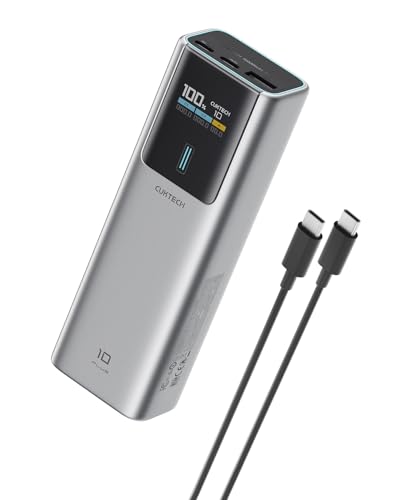
Public charging is very limited. Some ships have outlets near pool bars or atrium seating, but they're occupied throughout the day. Newer Icon-class and Virgin Voyages ships have more public charging points; most older ships do not. A high-capacity power bank (20,000 mAh or more) is the practical fix — charge it in the cabin overnight, carry it on deck and ashore.
Q. 08
Do newer cruise ships have USB ports in cabins?
Most ships built or refurbished since around 2019 include USB-A ports in cabins. USB-C is much newer and limited to the ships listed above. Built-in USB ports typically deliver around 2.1 A, which is fine for phones and tablets but slower than your own wall charger. For laptops, always use the wall outlet via your own USB-C charger.